Why Montessori

Our Approach
The Ved Griha Learning Framework
At Ved Griha, our educational philosophy rests on five essential pillars that guide every classroom experience.
1. Child Development Research
Our programs are grounded in decades of scientific research on how children grow, think, and learn. Every activity and material is carefully chosen to match natural developmental stages.
2. Exceptional Educators

Our educators are trained observers and thoughtful guides who support each child’s individual journey rather than directing it.

3. Personalised Learning Paths
No two children are alike. We design individual learning plans based on interests, abilities, and readiness.
4. Life Skills Development
Academic success is important – but so are resilience, responsibility, confidence, and independence.
5. Strong Parent Partnership
We work closely with families to ensure consistent support for the child’s growth both at school and at home.

Why Montessori?

The Montessori method, developed by Dr. Maria Montessori, is a child-centred approach based on scientific observation of children from birth to adolescence.

For over 100 years, Montessori education has empowered children across the world to grow into independent thinkers, confident learners, and responsible individuals.

Education for Today’s World

Traditional education systems were designed during the industrial era, built around standardisation, memorisation, and obedience.

But today’s world demands something different.

We need :

Montessori education prepares children for the 21st century by nurturing imagination, reasoning, creativity, and self-direction.

The Outcomes Montessori Delivers

Independence & Self-Confidence

At Ved Griha, children take responsibility for themselves and their environment — from caring for classroom materials to managing their own work.

By allowing mistakes and encouraging reflection, we nurture resilience and a growth mindset. Confidence comes from mastery, not praise.

Joyful Academic Excellence

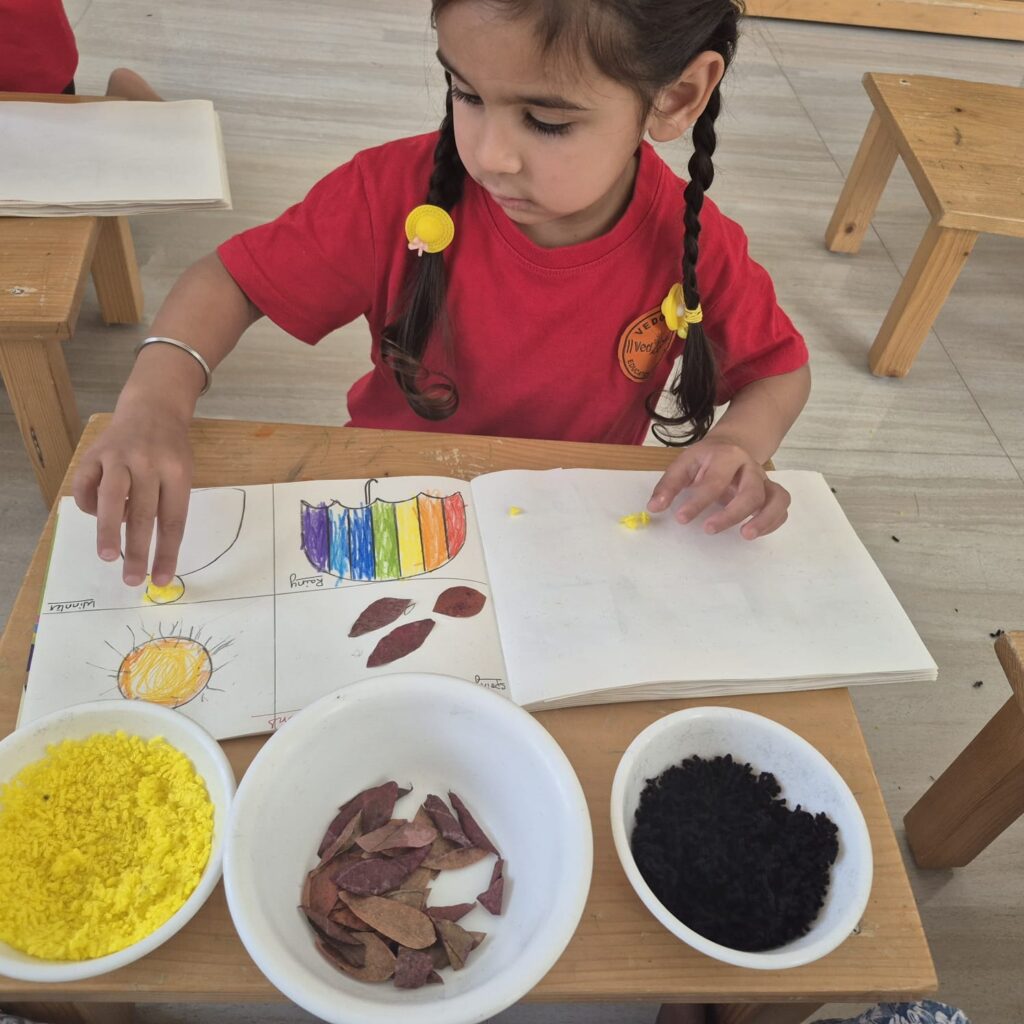
Children at Ved Griha learn reading, writing, and mathematics through activities they choose themselves.

Because learning is self-driven and meaningful, academic skills develop naturally and often exceed conventional grade expectations — without stress or pressure.

Executive Function Skills
Modern research highlights the importance of executive function skills such as:

Through structured routines and purposeful activities, Montessori education strengthens these abilities daily.

How Ved Griha Delivers These Outcomes

Uninterrupted Work Cycles

Unlike traditional schools with short 30–40 minute periods, Ved Griha offers extended, uninterrupted work cycles.

This allows children to:

True focus cannot grow in constant interruption.
Mixed-Age Communities
Children between 3–6 years (and beyond in higher levels) learn together in mixed-age classrooms. This creates:
Peer learning becomes natural and powerful.
The Prepared Environment
Our classrooms are carefully designed spaces where:
Children learn to evaluate their own work independently, without constant adult correction.

The Role of the Ved Griha Educator

Academic Guide

Educators prepare the environment and introduce materials when a child is ready – individually or in small groups.

Skilled Observer

Through careful observation, teachers understand each child’s interests, temperament, and developmental stage.

Role Model

Educators model empathy, patience, respect, and collaboration – nurturing global citizens and responsible individuals.

Our Programs

Toddler
Program

Pre Primary
Program

Primary
Program

Elementary
Program