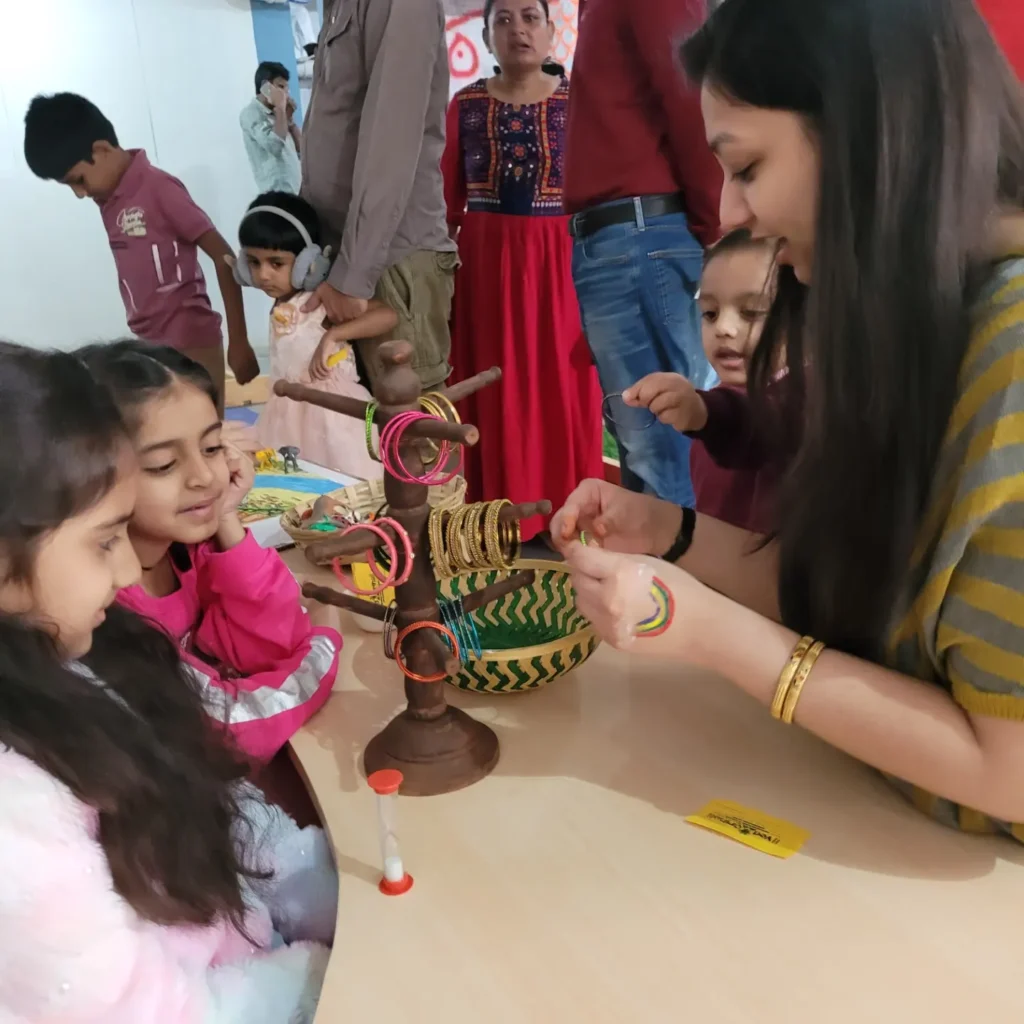
Ved Griha is a Montessori preschool and school committed to nurturing confident, independent, and capable learners. Our approach is child-centred and grounded in developmental research, designed to help each child discover and realise their unique potential.
Traditional schools often follow rigid timetables and standardised teaching methods that prioritise uniform delivery of content. At Ved Griha, learning is designed around the child’s developmental readiness. We provide uninterrupted work periods, mixed-age environments, and personalised learning paths so that children can progress meaningfully rather than mechanically.
Ved Griha follows authentic Montessori principles within a structured academic framework. It is not an alternative system but a thoughtfully evolved approach to education that aligns with how children naturally learn and grow.
Ved Griha offers programs beginning from 15 months onward, including the Toddler Program, the Preprimary/Primary Program, and the After-School Program. Extended daycare facilities are also available to support working families.
Personalised education recognises that every child learns differently and develops at a unique pace. At Ved Griha, children move forward when they demonstrate readiness and mastery. Educators closely observe each child, set meaningful goals in partnership with parents, and guide them through an individualised learning journey.
Yes. Montessori education builds deep conceptual understanding instead of rote memorisation. Children develop strong foundations in language and mathematics while also strengthening reasoning, concentration, and problem-solving abilities.
Children are free to choose their work within a carefully prepared environment. Freedom is always balanced with responsibility. Educators ensure that children remain purposeful, focused, and respectful of others while encouraging independence and collaboration.
Mixed-age classrooms create a natural learning community. Younger children are inspired by older peers, while older children develop leadership, patience, and confidence by guiding others. This structure promotes cooperation and mutual respect.
Ved Griha believes in a strong partnership between educators and parents. Regular goal-setting meetings, progress discussions, and open communication ensure that children receive consistent support both at school and at home.
Yes. Parents are welcome to share their expertise, conduct workshops, and participate in school activities, enriching the learning environment through real-world exposure.